MEDIA
· CIVILIZATION
· ARTS
Technology, Money, and Fascism
Power, Control, and Society in the 21st Century
Prologue: The Crossroads (2001)
Sometime at the end of 2001, we reached a
crossroads. There was a widespread sense that
history had cracked open—that society might
finally change for the better. The collapse of
old certainties seemed to invite renewal.
Instead, events unfolded in the opposite
direction. What followed was not reconstruction
grounded in justice or empathy, but a
convergence of power, fear, and control that
reshaped politics, economics, and culture.
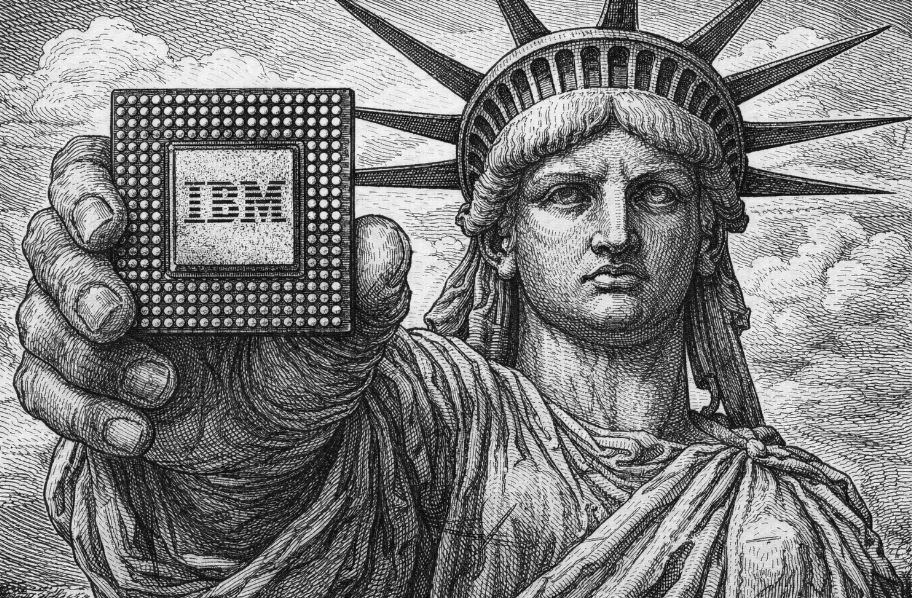
Independent media, critical theory, and digital
culture emerged as spaces of resistance and
reflection. Yet they also became entangled with
the very systems they sought to critique.
Between technology, collapse, and
reconstruction, a new landscape formed—one in
which old ideologies returned in new, more
subtle forms.
I. Christianity, Authority, and Fascism
Scriptural Tensions and Political Power
The Bible does not explicitly mention fascism,
yet its teachings have been repeatedly
interpreted to justify or resist authoritarian
rule. Central to this tension are competing
scriptural emphases:
Submission to Authority (Romans 13:1–7)
“Let everyone be subject to the governing
authorities, for there is no authority except
that which God has established.”
This passage has often been used to argue that
obedience to rulers—even unjust ones—is a
religious duty, since power is permitted by God.
Justice and Love (Prophets and Jesus’ Teachings)
The prophets condemned oppression and
exploitation, while Jesus emphasized compassion
for the marginalized and challenged unjust power
structures. These themes are frequently invoked
to critique authoritarianism, violence, and
state idolatry.
Resistance to Immoral Authority (Acts 5:29)
“We must obey God rather than human beings.”
This verse has been used to justify resistance
when state laws contradict divine or moral
commands.

Christianity Under Fascist Regimes
Christian responses to fascism have historically
diverged:
Support and Collaboration
Some Christians viewed fascist regimes as
restoring order, defending tradition, and
opposing communism. In Nazi Germany, for
example, segments of the church aligned
themselves with Hitler.
Opposition and Resistance
Others, such as Dietrich Bonhoeffer, rejected
fascism as fundamentally anti-Christian,
denouncing its racism and its elevation of the
state to an object of worship. “Christofascism”

The modern term Christofascism describes the
fusion of Christian identity with fascist
ideology. It highlights how selective readings
of scripture can transform faith into an
authoritarian instrument. Ultimately, the Bible
provides principles that can be mobilized both
to justify and to condemn fascism—depending on
which passages are emphasized.
II. Economic Shock and the Crisis of Capitalism
The 2008 Financial Collapse
While security crises dominated public
discourse, a deeper structural crisis unfolded
in the global economy. The financial collapse of
2008 exposed a system built on speculative
finance, deregulation, and extreme inequality.
Governments rushed to rescue banks deemed “too
big to fail,” while millions lost jobs, homes,
and futures. The consequences were profound:
Erosion of trust in institutions
Hollowing out of social safety nets through
austerity
Generations trapped in precarious work and
stagnant wages
Political Consequences

The promise that globalization would deliver
shared prosperity collapsed. Instead, the system
appeared to serve a narrow elite while demanding
sacrifice from everyone else. The Eurozone debt
crisis intensified this perception, as economic
decisions became increasingly technocratic and
insulated from democratic control. Politics
polarized—not primarily along ideological lines,
but along resentment, fear, and perceived
betrayal.
III. Technology as an Instrument of Power
Digital Surveillance and Behavioral Control
Modern technology—smartphones, biometric
systems, AI-driven analytics—enables near-total
monitoring of human behavior. In democratic
systems, these tools may be constrained. In
authoritarian systems, they become mechanisms of
absolute control.
Key trends include:
Mass data collection via social media, apps, and
IoT devices
Predictive algorithms anticipating “deviant”
behavior
Centralized digital identity systems
AI-driven policing and automated suspicion
profiles
Together, these systems create an ecosystem in
which dissent is not only punished, but
anticipated before it occurs.
Automation and Dehumanization
Automation promises efficiency, but without
ethical safeguards it risks:
Making individuals interchangeable
Reducing human judgment to algorithmic
instructions
Transforming complex social issues into
programmable behavior
A fully automated society drifts toward a
mechanical worldview in which individuality is
subordinate to systemic efficiency.
IV. Money and Economic Control
Concentration of Wealth
Global inequality has intensified, granting
corporations and financial institutions power
rivaling that of nation-states. This leads to:
Replacement of public services with private
corporate control
Policy capture through lobbying and financial
pressure
Markets shaping political outcomes
Economic power becomes political power.
Digital Money and Financial Surveillance
Digital payments, algorithmic finance, and
central bank digital currencies introduce
unprecedented financial visibility and control.
Potential risks include:
Real-time monitoring of purchases
Instant freezing or restriction of accounts
Behavior-conditioned access to financial tools
Money ceases to be neutral; it becomes a
mechanism of enforcement.

V. Fascism in the Modern Context
Classic Characteristics
Traditional fascism is defined by:
Centralized authority
Suppression of dissent
Nationalist or ideological purity
Subordination of individual rights
Militarization and propaganda
What has changed is not the ideology, but the
tools available to enforce it.
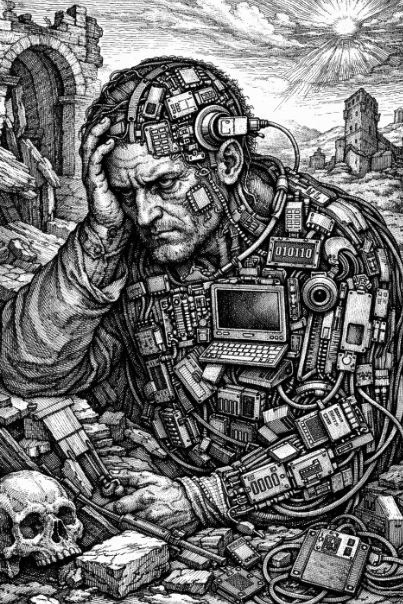
The Digital Mutation of Fascism
Contemporary authoritarianism often operates
without uniforms or mass rallies. Instead, it
functions through:
Invisible algorithms
Behavioral nudging
Information control
Digital echo chambers
Economic dependency
This produces a form of soft fascism: subtle,
data-driven, and psychologically engineered.
VI. Intersections: How Technology and Money
Enable Fascism
Algorithmic Governance
When algorithms determine access to employment,
welfare, mobility, or legal outcomes, opaque
systems gain immense power without democratic
accountability. This creates “authoritarianism
by default,” even in the absence of explicit
fascist intent.
Corporate–State Alliances
Modern authoritarian tendencies are marked by
the merging of political and corporate power.
When governments, tech firms, and financial
institutions share data and objectives, they
form:
Unified surveillance systems
Integrated economic-information complexes
This mirrors historical fascism, where
industrial elites and governments collaborated
to shape society.
Control Through Dependency
As life becomes digital, individuals grow
dependent on:
Platforms for communication
Banks for financial access
Algorithms for visibility
Digital IDs for public services
Dependency without alternatives equals control.
Control without transparency equals
authoritarianism.
VII. Humanity After Three World Wars (Literal or
Symbolic)
Across modern history, humanity has endured
repeated global catastrophes—military, economic,
technological, informational. Each time, the vow
is the same: Never again.
Yet the lesson remains unlearned.
The Cycle of Power and Fear
After every collapse, societies promise peace,
but quickly return to rivalry and dominance. Old
fears are revived with new technologies, and
weapons are prioritized over welfare.
Fading Memory
Collective memory decays rapidly. What begins as
“Never forget” becomes “Never happened to us.”
The Failure of Empathy
The most essential lesson—recognizing the
dignity and vulnerability of others—remains
elusive. Conflict reignites when people see
enemies instead of fellow humans. If history
repeats, it is not because it must—but because
we do.

VIII. Societal Impacts
Loss of Autonomy
Digital dependence erodes:
Privacy
Free expression
Economic independence
The ability to challenge systems
Algorithmically managed communication fragments
society, intensifying polarization and weakening
solidarity.
Tools and Responsibility
Technology itself is not the enemy. But when
concentrated in the hands of powerful political
and corporate entities, it enables fascistic
tendencies to thrive silently and efficiently.
Democracy must evolve alongside technology—or
risk being overtaken by it.
IX. Growth, Freedom, and Human Development
True growth cannot be predicted or constrained
entirely by rules and models. Nature—and
humanity—resists such limitations. Genuine
development requires:
Authentic love
Creativity
Reason
Connection over conformity.Modern society often
drives individuals toward escape
mechanisms—authoritarianism, destructiveness, or
conformity—fostering alienation and prioritizing
having over being.
Healthy societies cultivate “freedom to”, not
merely “freedom from,” and aim for optimal
rather than maximal consumption. Progress
without reflection is empty.
Peace without empathy is an illusion.
©
Vitrohype / Heyo Wurch vitrohype.net Digital and
Analogue Arts, Video, Programming, Music and
Graphics... Postadress / Imprint: Germany
Nienburgerstr. 56 - 31638 Stöckse ~ For
donations please use (German
Post Giro): IBAN DE42 3601
00430495 5544 35 Germany.